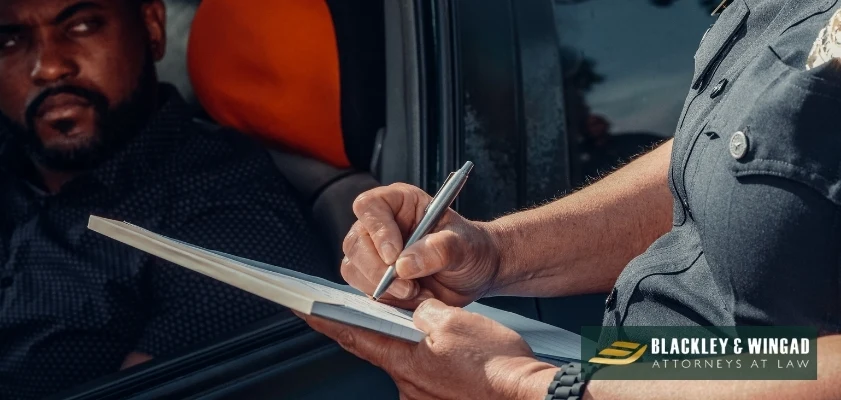

Being pulled over along Aurora Parkway, in North Capitol Hill, or another area in Colorado and accused of a drug-related crime can begin a long and stressful ordeal. Anyone facing drug charges after a traffic stop in Denver could potentially lose their freedom and face other serious consequences. One effective defense strategy that Blackley & Wingad could focus on is the legality of the stop, search, and seizure.
Common Reasons Why Vehicles May Be Stopped in Denver
A patchwork of law enforcement agencies enforce the law on Denver’s roads and highways, including the Denver Police Department, Colorado State Patrol, RTD Transit Police, and various campus police departments. Whether an officer is actively monitoring the road or observing an offense while en route to somewhere else, they may effect a stop, detain a driver, and investigate a potential infraction.
Speeding and other traffic-related infractions can lead to someone being pulled over. One 2025 report on driver behavior by CDOT found that 71% of state drivers self-reported speeding on highways at least part of the time. Other moving violations, such as unsafe turns, running red lights, and reckless driving, can also catch the attention of law enforcement. Expired license plates can also lead to fines.
After someone is pulled over, law enforcement may notice other signs that a drug-related crime has occurred. If police have probable cause to suspect that the vehicle contains drugs or other evidence of a more serious offense, they may search the vehicle and potentially arrest anyone suspected of committing a crime.
An arrest can also result from a traffic stop tied to an unrelated moving violation, significantly escalating the penalties that someone faces.
When Can Law Enforcement Lawfully Search My Vehicle?
Law enforcement generally needs a warrant or a recognized exception to the warrant requirement to search a vehicle. During a traffic stop, police may conduct a search when they have probable cause to think that the vehicle may have drugs, contraband, or other evidence of a crime.
A search may also be lawful when the driver voluntarily consents or under certain circumstances following an arrest. Police may seize illegal items that are in plain view during a lawful stop. If officers search a vehicle without sufficient legal justification, a defense attorney may seek to have any evidence obtained during the search suppressed.
How Unlawfully Obtained Evidence Can Be Suppressed
The U.S. Constitution (specifically, the Fourth Amendment) safeguards people against unreasonable seizures and searches by law enforcement. If police obtain drugs or other evidence through an unlawful vehicle search, a defense attorney may file a motion to suppress that evidence.
The court can examine whether officers:
- Had probable cause.
- Obtained valid consent.
- Possessed a warrant.
- Otherwise acted within a recognized exception to the warrant requirement.
If the judge determines that evidence was obtained by violating the Fourth Amendment, it may be excluded from the prosecution’s case.
Why Someone Should Hire a Drug Crime Lawyer
Being accused of a drug crime does not ultimately mean that someone will be convicted of a serious offense. The outcome of their case could depend heavily on their decision to hire a drug crime lawyer; ideally, one with years of experience in shielding clients from serious drug crime penalties. When a defendant hires a skilled Denver drug crime attorney, they can begin contesting the charges and seeking a favorable resolution to the case.
Colorado’s drug crime laws can play a role in suppressing evidence and weakening the prosecution’s position. The defense attorneys at Blackley & Wingad bring decades of combined legal experience to these matters. Our focused approach can protect a client’s freedom and work to keep them from becoming one of the roughly 30,000 Coloradans serving time behind bars in a given year.
FAQs
What Are the Grounds for a Lawful Vehicle Search After a Traffic Stop?
The grounds for a lawful vehicle search often hinge on why the driver was pulled over in the first place. An unlawful initial detention could make any evidence obtained during a subsequent search subject to suppression. In general, police may lawfully search a vehicle with consent, a valid warrant, probable cause, or another recognized exception to the warrant requirement.
What Rights Are Protected During a Traffic Stop?
Many important constitutional rights are protected during a traffic stop. The Fourth Amendment prohibits the government from unlawfully stopping someone and searching their vehicle. The right to remain silent is further protected by the Fifth Amendment. Drivers generally do not have to answer potentially incriminating questions, although they may be required to provide a driver’s license, registration, and proof of insurance.
Can Someone Refuse to Let a Police Officer Search Their Car?
In certain cases. If someone was unlawfully pulled over and the police do not have a warrant to search their vehicle, they have the right to refuse to allow them to search their car. However, refusing consent does not necessarily prevent a search if officers have probable cause or another lawful basis to search the car without a warrant.
What Qualifies as an Unreasonable Search and Seizure?
What qualifies as an unreasonable search and seizure depends on the circumstances surrounding the traffic stop and subsequent search. A search may violate the Fourth Amendment when officers lack a warrant, probable cause, valid consent, or another recognized legal justification. Evidence obtained through an unconstitutional search may potentially be excluded from a criminal case.
Let Blackley & Wingad Challenge the Evidence
Evidence found inside a vehicle can become the foundation of a Denver drug prosecution, but police do not have unlimited authority to conduct searches. A careful review of the traffic stop, search, seizure, and arrest can uncover constitutional or procedural issues that may affect how the prosecution can use its evidence.
Blackley & Wingad, Attorneys at Law, PLLC, has handled hundreds of drug crime cases, conducting countless investigations and depositions during their criminal defense careers. Our trial-ready lawyers know how to scrutinize law enforcement actions and contest questionable evidence. Contact our Denver office today to discuss how to mount a defense.