Salt Lake City :801-278-3700 | Denver :720-520-6463
Salt Lake City :801-278-3700 | Denver :720-520-6463

Driving with a blood alcohol content below the state’s 0.08% BAC limit doesn’t necessarily mean that someone is free of suspicion in Colorado. After being pulled over in Capitol Hill, Sun Valley, or another neighborhood in Denver, law enforcement has wide discretion in charging someone with Driving While Ability Impaired (DWAI). Anyone facing this serious criminal charge can rely on a trusted Denver DWAI lawyer to pursue an outcome that protects their freedom and driving privileges.
When a defendant’s freedom and driving privileges are endangered, they need legal representation prepared to tirelessly defend them. Blackley & Wingad brings decades of courtroom and trial experience to criminal cases, including those involving driver impairment. When clients partner with our law firm, they gain the steady support of attorneys who understand the importance of relentless preparation and tireless advocacy.
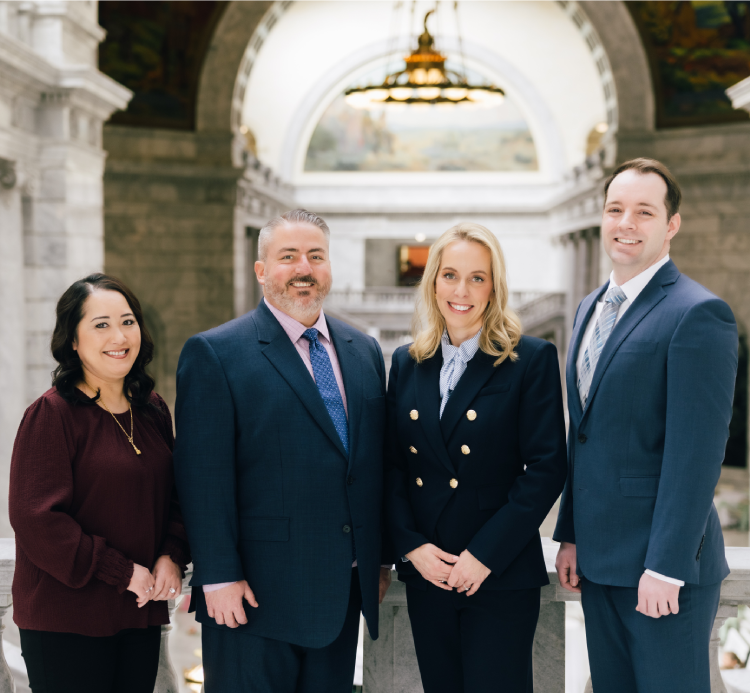
What sets our law firm apart is our willingness to pursue every viable defense strategy when protecting clients from serious criminal penalties. Our founding attorneys met while working as public defenders, becoming partners in life and law while raising two children. Our lawyers understand the stress and challenges that can follow a DWAI arrest, so they are prepared to give clients a voice while building a strong defense for contesting the charges.

Colorado treats DWAIs as a separate offense from driving under the influence. Under Colorado Revised Statutes § 42-4-1301, a person commits DWAI when alcohol, drugs, or a combination of the two even slightly affects their ability to operate a vehicle. This means the prosecution does not need to establish the higher level of impairment required for a DUI conviction.
These laws aim to reduce the rate of impaired driving in a state that saw 236 deaths in 2025 tied to drunk or intoxicated drivers. That year, law enforcement across the state made arrests that led to 16,665 DUI cases being filed, with the main age group for defendants being those between 25 and 34.
A BAC above 0.05% but below 0.08% creates a permissible inference that the driver’s ability to operate a vehicle was impaired. Colorado does not require a particular BAC to establish DWAI. Prosecutors may rely on other evidence, including:
A DWAI conviction can carry criminal and driving-related consequences. A first offense is a misdemeanor punishable by
Prior impaired-driving convictions can substantially increase the potential penalties.
Although a DWAI does not automatically lead to the revocation of a defendant’s license, it does add points to their driving record that could lead to similar consequences. Under state law, anyone cited with 12 points or more within 12 months could have their license suspended. A DWAI conviction can also leave a permanent criminal record, which can create challenges in securing gainful employment and future housing.
After any arrest, suspects are typically transported to a local jail for booking and processing. After being pulled over and detained, it is important to remember that suspects do not have to answer questions about where they were, whether they had been drinking, or any other potentially incriminating circumstances.
Drivers are required to present their driver’s license and related documentation, but they should refrain from discussing the circumstances surrounding their arrest. If they are arrested, they may spend time at Van Cise-Simonet Detention Center at 490 W. Colfax Avenue. Processing involves photographs, fingerprinting, and an assessment of whether someone is granted bail.
Following booking, an accused driver may appear before a judge for an advisement, where the court addresses their charges, constitutional rights, and conditions of release. This is an important early stage of a DWAI case, as statements made after an arrest and evidence collected by police may later become part of the prosecution’s case.
An attorney can then begin:
After release, defendants are required to make regular court appearances. After entering a plea of not guilty, the case enters the pretrial phase, where the defendant’s attorney can review the evidence and begin preparing a defense.
Whether a person was arrested along Denver-East Colfax Avenue, North Monaco Street Parkway, or another part of Denver, an effective defense strategy begins with a careful review of the traffic stop and the evidence gathered by law enforcement. A DWAI lawyer may:
Other strategies may involve challenging an officer’s observations of alleged impairment or presenting alternative explanations for driving behavior. An experienced attorney can also examine police reports, body camera footage, witness statements, and other evidence for inconsistencies that may weaken the prosecution’s case.
The decision to hire a DWAI lawyer can protect someone from becoming one of the roughly 30,000 people serving time behind bars across Colorado in a typical year. Colorado’s DWAI laws can lead to serious penalties that can deprive someone of their freedom. They can also leave them facing personal and work-related challenges. The burden of proof falls on the state, and a Denver DWAI attorney can manage a DWAI case by focusing on casting doubt on the allegations.
A seasoned defense lawyer can explain the accusations that their client is facing and the potential strategies for successfully contesting the charges. Blackley & Wingad focuses on high-stakes criminal cases, including those tied to DWAI charges. We bring decades of combined experience to these matters and a strong record of securing favorable outcomes for our clients. When necessary, we are more than prepared to request a trial date when seeking an acquittal.
What happens if someone gets a DWAI in Colorado depends partly on the steps they take and the quality of their legal representation. A first DWAI conviction can result in:
Prior impaired-driving convictions can expose an accused driver to substantially greater penalties.
There is no strict legal limit for DWAI in Colorado. Under state law, a BAC above 0.05% but below 0.08% creates a permissible inference that a driver’s ability was impaired. However, prosecutors do not need a particular BAC to prove DWAI. They may use field sobriety tests, a driver’s driving behavior, officer observations, chemical testing, and other evidence to argue that a driver was impaired to the slightest degree.
Generally, yes. DWAI has a lower threshold for impairment than DUI and carries less severe penalties for a first offense. Prosecutors may pursue DWAI charges when the evidence supports some degree of impairment, but it is insufficient to establish the greater level of impairment required for DUI. However, DWAI remains a criminal offense that can result in jail time, fines, public service, eight license points, and a lasting criminal record.
A DWAI conviction can remain on someone’s Colorado criminal record indefinitely. Colorado law generally does not allow an adult DWAI to be sealed after the case results in a conviction. This can make contesting the charge before a conviction particularly important. A criminal record may become relevant during background checks and other situations long after the court-imposed penalties for the original DWAI case have been completed.
Possibly. A DWAI conviction does not, by itself, trigger the automatic license revocation associated with a BAC of 0.08% or higher, but Colorado assesses eight points against a driver’s license for DWAI. Accumulating enough points within a specified period can result in suspension. Separate administrative consequences may also arise from the circumstances of an impaired-driving arrest, including chemical-test results or a refusal to submit to required testing.
A DWAI conviction can result in jail time, fines, points against a driver’s license, and other consequences that extend well beyond the courtroom. Experienced legal representation can be critical for contesting a case. Blackley & Wingad brings decades of experience and unmatched trial experience to defending clients accused of impaired driving offenses.
Our Denver DWAI lawyers prepare every case with the attention and determination necessary to challenge the prosecution’s evidence and pursue every viable defense. Contact Blackley & Wingad today to discuss the case and learn how our trial-ready attorneys can help.
Fighting criminal charges. Safeguarding families. Delivering results.
Fields marked with an “*” are required
"*" indicates required fields
© 2026 Blackley & Wingad, Attorneys at Law, PLLC • All Rights Reserved. Disclaimer | Site Map | Privacy Policy. Digital Marketing By: 
*Images are obtained under license from Canva and other third-party stock image providers, with attribution included where required.